What to Look For in a Plumbing Answering Service (and What It Should Cost)
Not every answering service is built for plumbing. Here's what actually matters when you pick one, and what a fair price looks like.
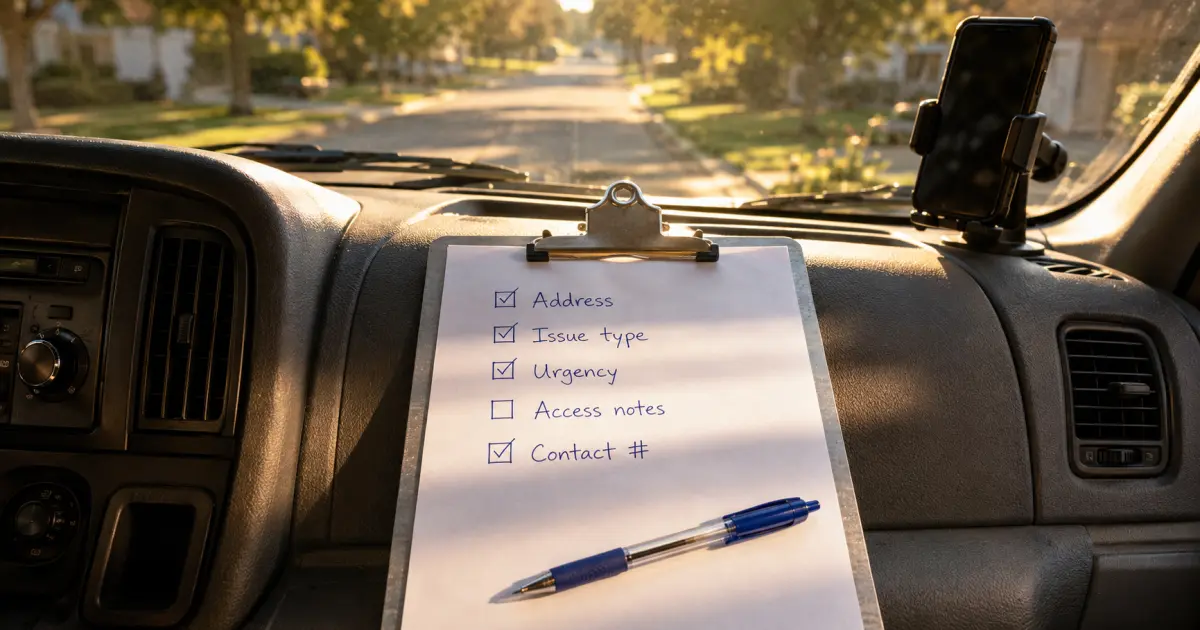
Most answering services were built for dentists, lawyers, and law firms, then pointed at the trades as an afterthought. They take a message and hand you a callback list. For a plumbing shop, that’s barely better than voicemail.
If you’re going to pay someone, or something, to answer your phone, here’s what actually moves the needle, and what a fair price looks like.
It has to know plumbing
A generic call center can’t tell a burst pipe from a dripping faucet. It reads a script, asks for a name and number, and promises a callback. By the time you call back, the emergency went to the next plumber.
What you want is something that asks the right questions: what broke, where, residential or commercial, how bad is it. The difference between “we’ll have someone call you” and “I’ve got a burst pipe at 14 Maple, water’s shut off, he’s on his way” is the difference between losing the job and running it.
It has to catch the emergency
After-hours emergencies are your highest-margin work. A good service recognizes one the moment the caller describes it, changes the call flow, and gets it to you fast: a real text to your phone, not a notification buried in some dashboard you’ll check tomorrow.
If the only way you find out about a 2am flood is by scrolling a missed-call log the next morning, the service isn’t doing its job.
It has to remember your customers
This is the part almost everyone skips. When a repeat customer calls back, they should be greeted by name, with their address and last job already on file, not put through the full cold intake like a stranger.
Memory is what turns one-time jobs into regulars. A service that treats every call as brand new is quietly training your best customers to shop around.
It has to book the job, not take a message
Taking a message just moves the work to you. Booking the job (capturing the details, putting it on your calendar, confirming with the customer by text) is what actually saves you time. Ask whether it books or just relays.
It should keep your number and stay in your control
You shouldn’t need new hardware, a new line, or a contract. The right setup forwards your missed calls in a couple of minutes, keeps your existing number, and lets you switch it on and off whenever you want.
What it should cost
Here’s the honest math. A full-time receptionist runs $3,000 or more a month once you count wages, payroll, and the desk, and they still go home at five, take lunch, and call in sick.
A service built for this should start around $95 a month, with no contract and no setup fee. Most shops cover the cost from one or two jobs they would have lost to voicemail. Here’s the full cost comparison against a receptionist. If a service wants a long contract or won’t tell you the price up front, that tells you something.
The short version
Answering the phone is the easy part. What separates a real plumbing answering service from a glorified voicemail is whether it knows the trade, catches emergencies, remembers customers, and books the job, at a price you recover in a job or two.
That’s exactly what Bella does. Plumber Secretary is built as the AI receptionist for plumbers, not a general answering service with plumbing bolted on after the fact. See it handle a real call in a 10-minute demo.